
- The sheer numbers and vast array of Latin American wildlife species offered for sale in one of Southeast Asia’s largest wildlife markets, in Thailand, has been steadily rising over the past two years, observers say, alongside animals from across the globe.
- The trend points to a broader shift in the global wildlife trade, with more species coming out of the imperiled Amazon and many of them sold as pets.
- Trafficked animals are often laundered from other South American countries through Peru, where regulations make it easier to export species abroad.
- Many of these species are threatened, plucked from the wild, and then face abhorrent conditions during the journey from the Amazon to Asia, raising further animal welfare concerns; many perish during transit.
BANGKOK, Thailand — In the narrow alleys of Bangkok’s Chatuchak Market, the world’s wildlife is for sale.
Ensnared in jungles, fished out of rivers and plucked from wetlands across the globe, hundreds of exotic species are packed onto transcontinental flights only to end up on display in what experts say ranks as one of the largest wildlife markets on Earth.
Here, alongside Thai milk tea vendors and mango sticky rice stalls, visitors need only veer a few steps from the tourist path to end up in the market’s “Pets” zone — an arguably liberal use of the term. This section of the market hosts a menagerie of domestic and wild animals alike, often crammed into cages with little water and no respite from temperatures that soar beyond 32° Celsius (90° Fahrenheit).
From Africa, there are spurred tortoises, fennec foxes, gray parrots, serval cats, and ball pythons. Giant bush babies retail for 48,000 baht (about $1,450), with signs advertising the nocturnal African primates as “newly arrived.” Miniscule meerkats dressed in tutus, sometimes presented in petting zoo sandboxes, are among the most plentiful animals at Chatuchak.
Masked palm civets, sugar gliders, squirrels, rainbow lorikeets, and eclectus parrots are on offer from Asia and Oceania. As are baby raccoons, prairie dogs, iguanas, goats, cats, baby pigs, among others.
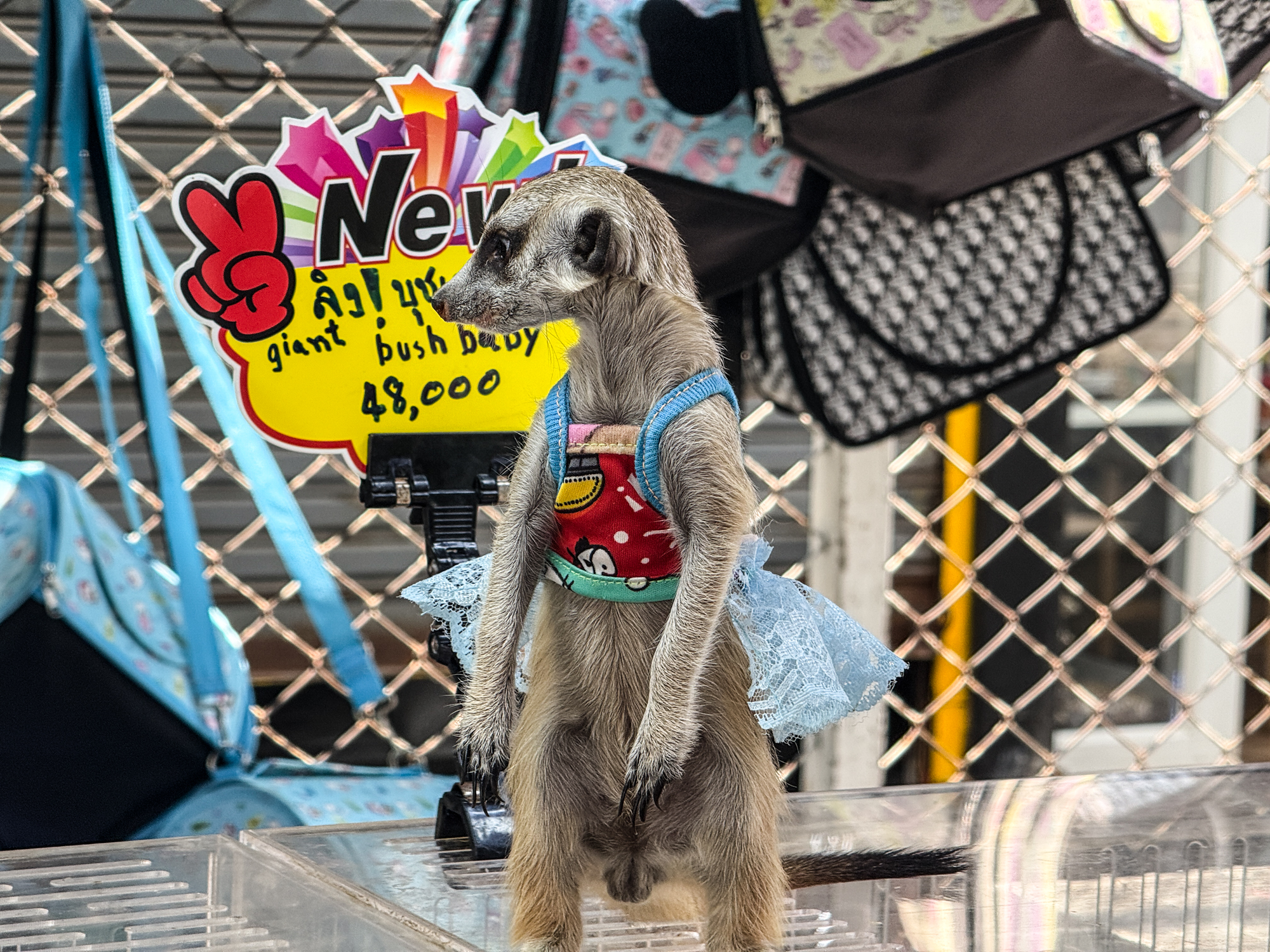
To Scott Roberton, who leads the nonprofit Wildlife Conservation Society’s countertrafficking program, the most shocking development is the sheer glut of South American species now filling the market’s shelves.
Every few weeks, the Bangkok-based Roberton visits Chatuchak to take stock of what’s for sale. Coming here often, he says, allows him to spot emerging trends in the global wildlife trade.
Recently, he’s witnessed an alarming increase in South American species — particularly marmosets and other primates — showing up in the Thai market. “It’s changed a lot in the past two years. The volume is greater. The diversity of species is greater,” he says.
Roberton weaves through the maze of alleys, past freshwater matamata turtles from the Amazon Basin and Chaco tortoises from Patagonia. Blue and scarlet macaws squawk from small wire cages. Tiny capuchin monkeys, tamarins, and marmosets shrink in their enclosures alongside coatis, capybaras, and maras — rabbit-like animals from Argentina.
The fish section is especially prolific, with redtail catfish, zebra pleco — endemic to a small section of Brazil’s Xingu River — and stingrays stuffed into plastic bags, tubs, and tanks, lined up on the public-facing sidewalk.
“Every time we come, there is a new species here,” Roberton says with a mix of dismay and frustration. Both the coatis and maras, he adds, are recent additions.


Not all animals for sale at Chatuchak are part of the illegal trade, though many are. And even if sale of a species is legal, that doesn’t mean it isn’t still threatened with extinction.
During a 2015 survey of bird species at Chatuchak, for example, the investigative wildlife trade watchdog TRAFFIC counted 17 species listed as threatened or near threatened under the IUCN Red List — more than half of which were native to Thailand. The birds were considered wild-caught and therefore protected by national legislation that prohibits their capture and trade.
In addition to national laws, a global treaty, the Convention on International Trade in Endangered Species (CITES), regulates cross-border wildlife trade. CITES lists species under three appendices: those threatened with extinction, for which commercial international trade is generally prohibited; species that could become threatened without trade controls; and species that are protected by a particular country that has asked others to help control commercial trade.
Many Latin American species found in Chatukchak, experts tell Mongabay, may be protected from export in their native countries, yet ultimately end up with paperwork that appears to confirm their legal status when crossing into Southeast Asia. That’s because somewhere along the trade route, they’ve been laundered into the legal supply chain with fraudulent permits. This, experts say, poses a big challenge for law enforcement.
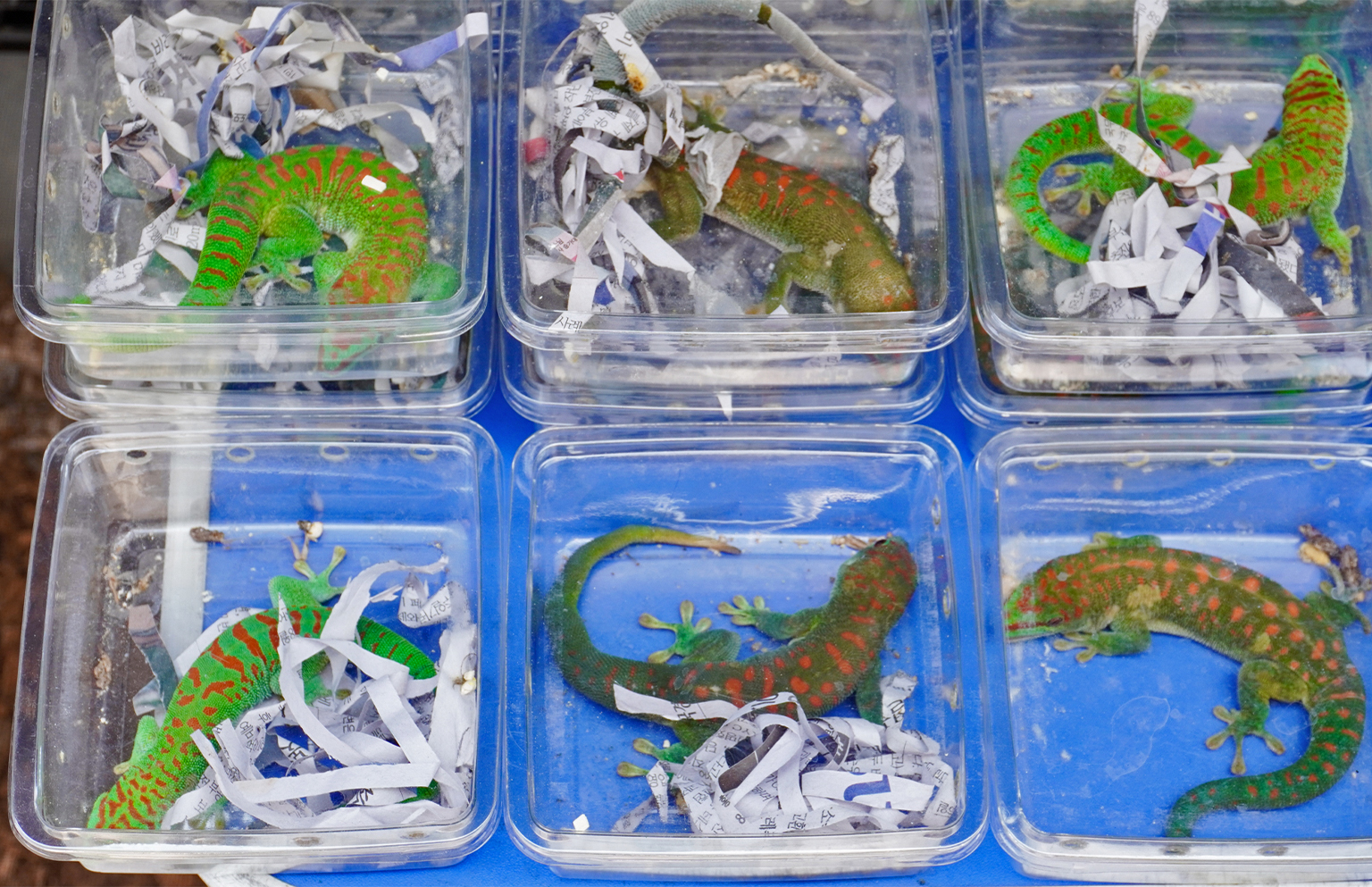
Chatuchak, which likely ranks only behind Jakarta’s wildlife markets in scale, has long attracted international criticism for both its treatment of animals and for biosecurity risks, particularly following the COVID-19 pandemic. Many domestic animals — kittens and puppies — are kept in close quarters with exotic species and are often situated near food stalls. Zoonotic diseases, including avian influenza and coronaviruses, could spread from animals to humans due to the close contact, high animal density, and unsanitary conditions.
Objections to the market reached a crescendo in 2024 after an electrical fire broke out in the pet zone, burning more than 1,000 animals alive. Many people hoped the fire would finally shutter the wildlife market, but vendors swiftly returned — with support from city officials. In the aftermath, local media reported that Bangkok’s governor encouraged people to purchase pets at the market to help retailers. If anything, experts say, the wildlife market has grown.
“Chatuchak market is a shame on the city of Bangkok,” Edwin Wiek, founder of the nonprofit Wildlife Friends Foundation Thailand, said at the time. “It has been allowed to continue selling animals unethically and often illegally for far too long.”
Thailand’s Department of National Parks, Wildlife and Plant Conservation did not respond to a request for comment regarding its monitoring and enforcement activities by the time this story was published.


The rainforest hub
The story playing out in the scorching alleys of Chatuchak begins more than 10,000 miles away, in the city of Iquitos, deep within the Peruvian Amazon. It has long been a major hub of the illegal wildlife trade, benefitting from the sheer diversity in the jungle just beyond its edges.
The bounty of the world’s largest tropical rainforest is easily smuggled by boat into the sprawling city that lies at the confluence of the Amazon, Nanay and Itaya rivers. From there, it can be ferried onward to the capital, Lima, on one of several daily commercial flights, connecting the remote river town with buyers around the world.
The Amazon is home to about a quarter of the planet’s terrestrial plant and animal species — and more fish than any other river system. Though more than 12,000 Amazonian species are protected under CITES, that hasn’t managed to stem the outward flow of the jungle’s most coveted species. Today, routes out of the Amazon are well trodden for wildlife as well as other criminal cargo.
The massive trade in elephant ivory and rhino horn has garnered much global attention since the trade reached crisis proportions in the late 2000s. But wildlife trafficking from Latin America has often been overlooked, experts say.
This has helped the illegal trade to flourish in the region. Unlike the high-value wildlife products coming out of Africa, however, this trade is more varied and focuses on live animals for the global pet trade. A 2025 report, for example, found that 90% of seizures in Europe for shipments from Latin America were of live animals.
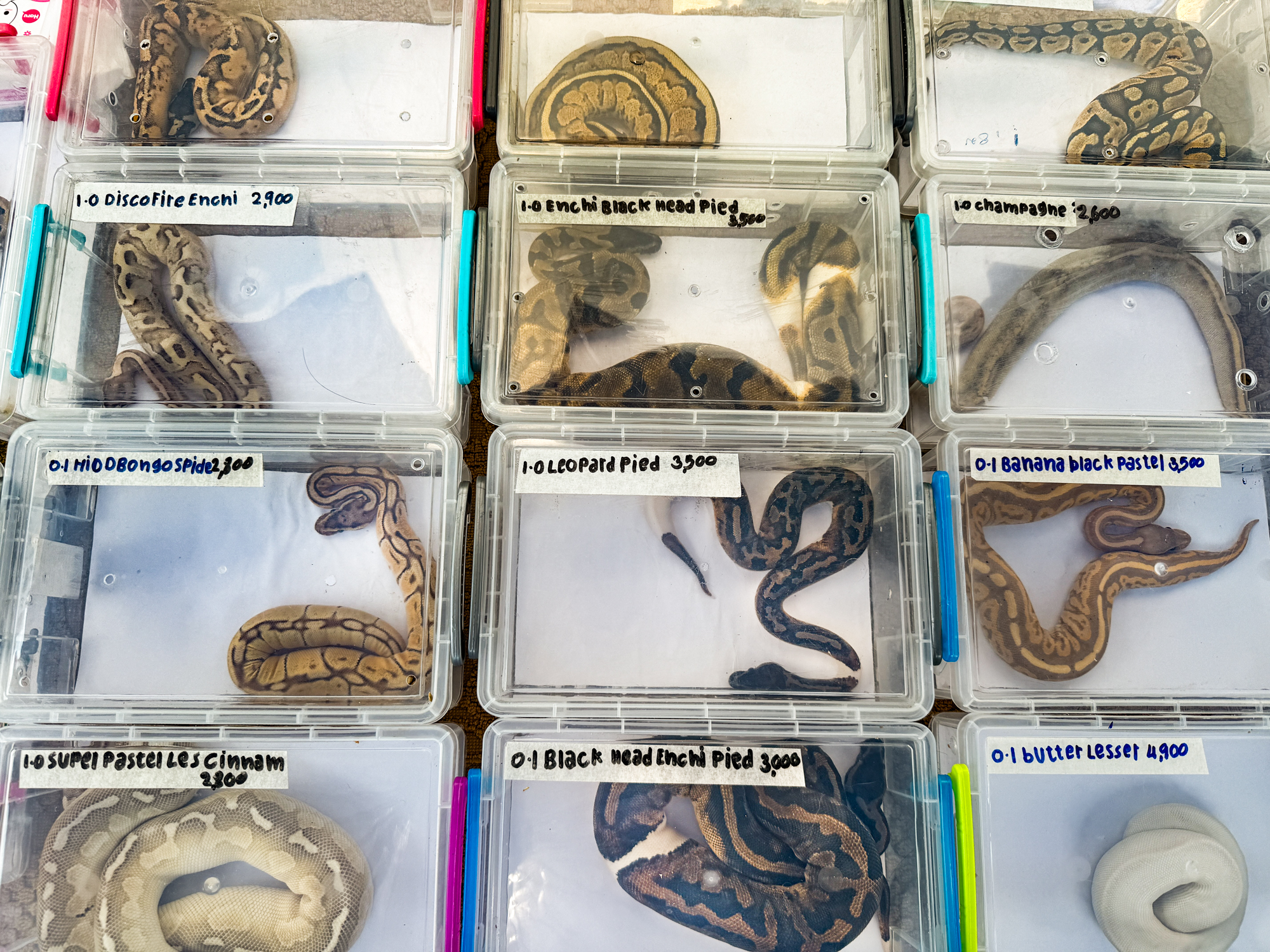
“Iquitos is a city where a lot of illegal commodities move freely within the Amazon,” says Renata Cao, the Latin America project lead at TRAFFIC. “A lot of products from different countries get to Iquitos, and then in Peru it’s easier to launder.”
Peruvian law recognizes two legitimate sources of wildlife that can be sold internationally: Animals can be legally taken from authorized “wildlife management areas,” which are protected areas that sometimes allow for sustainable management quotas, and from captive-breeding facilities.
Export require documents that establish legal origin, but this trade opens the door to corruption and illegal trafficking: false permits, incorrect species classifications and poached animals laundered within legally exported species.
Protected species from Colombia, for example, can “go across the border and then they get laundered in Peru and exported with fake papers that say they were captive bred, but they were really caught in the wild in other countries,” Cao explains.
More than half of the Amazon falls within Brazil, the rest spilling over into Bolivia, Colombia, Ecuador, Guyana, Venezuela, French Guiana, Suriname and Peru.
“The Amazon is a very vast region and it’s full of rivers,” says Roberto Vieto, animal welfare adviser at the nonprofit World Animal Protection.
He describes the process: After nabbing an animal from the wild, “from a community, you take a boat and you can smuggle whatever you want and get into the city.” It’s difficult to set up adequate checkpoints and trade controls along rivers, he adds. “That’s why Brazil, Colombia and Peru need to make coordinated efforts.”

In Iquitos, Chatuchak finds its parallel at Belén Market, where a shockingly diverse and sordid array of live animals and animal parts are up for grabs, from jaguar skins and fangs to anacondas. The market, experts say, offers a glimpse of what may also be exported to Asia, such as river fish that are popular in the aquarium trade and yellow-spotted Amazon river turtles.
“Belén shouldn’t be viewed as an isolated market — it’s a visible node in a much larger wildlife trade network,” says Neil D’Cruze, a wildlife researcher who led a one-year survey of the market’s wild merchandise between September 2022 and September 2023. He and his colleagues documented at least 71 wildlife species for sale at Belén and nearby Modelo Market, including mammals, reptiles, and birds, with more than a quarter of those classified as threatened or near threatened nationally or globally.
“I wouldn’t be surprised if some of the Amazonian species we see being sold as pets at Belén are also turning up in exotic pet markets in Southeast Asia,” D’Cruze says.
He adds that while their research didn’t demonstrate a direct trafficking route between Belén and Southeast Asia, if the same species are turning up at both ends, it raises an important question “about whether these geographically distant markets could be connected through wider international trafficking networks.”


Experts say it’s hard to determine why exactly there’s been a marked increase of Latin American wildlife showing up in Southeast Asia in recent years. But social media posts that showcase people playing with and cuddling increasingly exotic species have undoubtedly played a major role.
“In Iquitos, historically, local communities have used wildlife for meat and for spiritual uses, and, increasingly, for pets,” D’Cruze says. But with social media, “what’s really changed now is the ability to take those products and reach a broader urban market.”
“The market stall is really just the visible part of a much longer supply chain,” he says. “And increasingly, that physical supply chain is intersecting with a global digital marketplace capable of connecting sellers and buyers thousands of miles apart.”
Previously, the Wildlife Conservation Society found that the wildlife trade between South America and Asia had roughly doubled between the early 2010s and 2020, but much of that was with China.
This trade route is thought to have been aided by more than $140 billion in loans from state-owned Chinese banks to Latin American countries between 2005 and 2018, according to estimates from the Inter-American Dialogue and the Global China Initiative at Boston University in the U.S. Much of this has gone into infrastructure, mining, and energy projects in the Amazon, prompting foreign workers to flood into the rainforest.
A similar pattern unfolded in the early 2000s when Chinese mining, logging, and infrastructure companies moved into Africa, sparking catastrophic rates of elephant, rhino, and pangolin poaching.
But experts tell Mongabay it’s likely that the current spate of wild animals heading into Thailand’s markets aren’t cutting through China as an intermediary. “In Chatuchak and Thailand, the trade is so well established I wouldn’t think that they would need to involve China,” D’Cruze says.

Sweltering sloths
The fact that South American species have caught on in Southeast Asia doesn’t only pose a conservation concern: It also raises animal welfare issues.
“Iquitos is the hub of receiving wild animals, even from regions that look far on the map,” Vieto says. “From the border with Brazil, it can take a couple days. Animals are moving long distances to reach Iquitos.”
But that’s small change compared to the rest of the trip. It’s a two-hour flight from Iquitos to Lima, and then more than 25 hours to reach Southeast Asia by plane.
“There are no direct flights, so it will be a super long journey with several stops,” Vieto says. “That is only causing extreme stress for the animals, and the level of mortality is super high.”
It’s unknown exactly how many trafficked animals die in transit. A report prepared for the EU on wildlife trafficking found that 70% of wild animals die within six weeks of capture and 75% of pet reptiles and amphibians die within the first year due to inappropriate care.

D’Cruze and Vieto each invoked a traumatic video they’d viewed of a sloth being smuggled to Iquitos. The footage shows a sloth clinging to a tree in the Peruvian jungle as two men hack away at its trunk. When the tree falls, the men grab the animal and stuff it headfirst into a sack before transferring it onto a boat. The sloth is kept that way until it reaches Belén Market, where it’s sold for the equivalent of $13.
“Can you imagine the sloth being inside a sack, the temperature, not being able to hold onto something which is the normal position for the animal?” Vieto says. Sloths are easily stressed and highly specialized animals whose bodies are adapted for life in the canopy, not transport or handling.
Back in Bangkok’s market, Roberton moves past a business whose sign advertises white-cheeked gibbons and toucans for sale. And sloths. Months earlier, both the two-toed sloth and Linnaeus’s two-toed sloth were added to CITES Appendix II, now requiring CITES permits for export.
“This is just the shop window,” Roberton says. “The rare animals are often kept offsite.” Online, the business’s Facebook page shows a baby capuchin monkey, a tree kangaroo, and a spotted hyena for sale.

Banner image: Wildlife of all kinds are sold in Bangkok’s Chatuchak Market’s ‘Pets’ zone, with growing numbers coming from Latin America. Image by Gloria Dickie.
New global guidelines needed to rein in the wildlife pet trade (commentary)
Sloth selfies are feeding a booming wildlife trafficking trade
Report reveals staggering levels of wildlife trafficking in Hispanic America
Citations:
D’Cruze, N., Elwin, A., Perez-Peña, P. E., Vieto, R., Asfaw, A. E., & Harrington, L. A. (2024). Wildlife trade at Belén and Modelo market, Peru: Defining a baseline for conservation monitoring. Frontiers in Conservation Science, 5. doi:10.3389/fcosc.2024.1464332
Niu, J., Chen, X., Xu, W., & Liu, J. (2026). Role of transit countries in global illegal wildlife trade. Conservation Biology, 40(3), e70226 doi:10.1111/cobi.70226
FEEDBACK: Use this form to send a message to the author or editor of this post. If you’d like to post a public comment, you can do so at the bottom of the page.
